
In today’s fast-paced and digitally driven world, stress has become a normal part of life. Stress is affecting individuals across age groups, professions, and backgrounds. This pressure mostly comes from things like trying to meet work deadlines, family responsibilities, or societal expectations. All this often leaves us feeling overwhelmed and exhausted. Chronic stress has far-reaching effects, not only on mental health but also on physical well-being.
This is why it is imperative to find effective ways to manage it. One practice that is gaining significant attention in the wellness world is mindfulness. Mindfulness is rooted in ancient traditions, and is increasingly being supported by modern scientific research as an effective approach to stress management. Therefore, in this article, you will learn the role of mindfulness in reducing stress.
Reading it will provide you with a detailed look at various mindfulness techniques you can practice even at the comfort of your own home. The best part is that all these practices are backed up by science and have proven to be effective.
What is Mindfulness?
Mindfulness is often described as the art of “being present.” However, its depth goes far beyond this simple definition. At its core, mindfulness is a mental practice that involves paying full attention to the present moment with an attitude of openness and acceptance. It is about bringing your mind into alignment with your body, cultivating a state of awareness of your thoughts, feelings, and bodily sensations without allowing judgment or distraction to interfere.
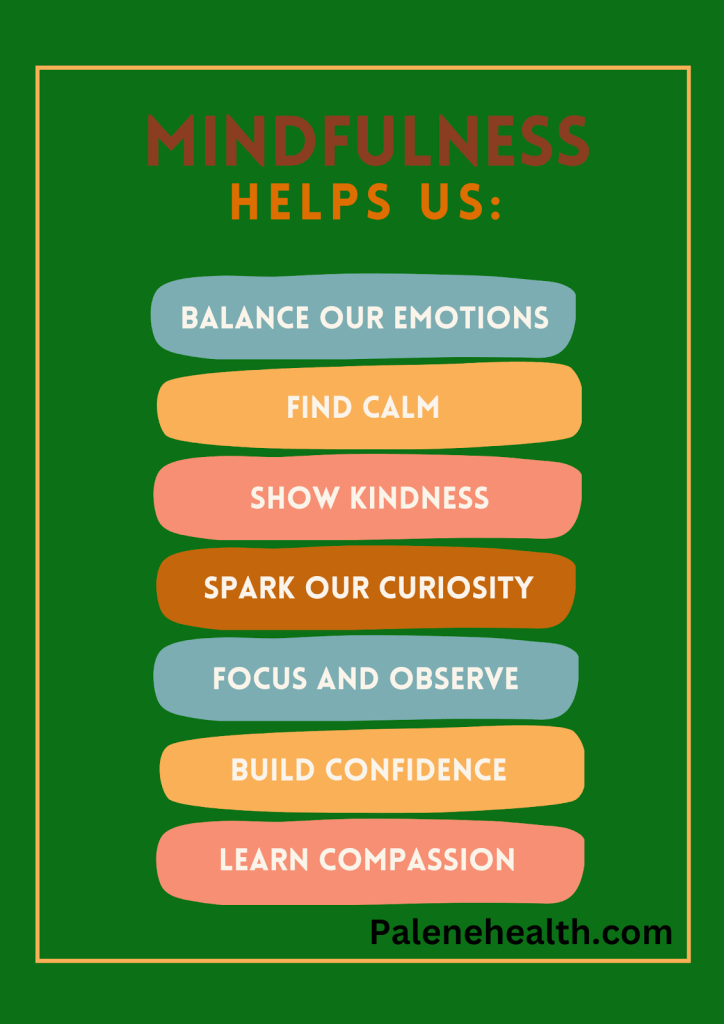
This state of awareness is what helps individuals to observe their mental and emotional states without reacting impulsively, making it especially useful for managing stress. In simple words, practicing mindfulness trains your brain to respond to stress with more clarity and calm, rather than succumbing to it.
One thing you should understand is that mindfulness is not about avoiding stress or eliminating challenging situations, no. It’s rather about changing the way we perceive and react to them. By cultivating mindfulness, we can break the cycle of reactive patterns that often amplify stress and anxiety.
Instead of being caught up in a whirlwind of negative thoughts and emotions, mindfulness allows us to pause, observe, and choose a more thoughtful response. Mindfulness teaches us to remain calm to avoid situations that would otherwise cause us harm and push us to regret.
The Science Behind Mindfulness
Mindfulness has its roots in ancient practices, particularly within Buddhist traditions. It is a practice that dates back to 2500 years and continues to show positive results. As if today, modern science has played a crucial role in validating its benefits for mental and physical health. In stress reduction, mindfulness is often attributed to Jon Kabat-Zinn in 1979.
Kabat-Zin was inspired by the Buddhists and began the Mindfulness-Based Stress Reduction (MBSR) to manage chronic pain and stress related disorders. Since then, the rise of interest in mindfulness has led to a growing body of research that examines its effects on the brain and body.
Here’s a closer look at some of the key findings:
Impact on Brain Structure and Function
As technology evolves, it has led to the discovery of highly advanced medical tools for examination. One of such tools is Advances in neuroimaging techniques, such as functional MRI (fMRI) and MRI scans, which have allowed researchers to observe changes in the brain’s structure and function as a result of mindfulness practice.
One of the most notable studies was published in NeuroImage in 2023. It used advanced neuroimaging techniques to examine the effects of mindfulness on brain function. Researchers found that mindfulness meditation significantly increased connectivity between brain regions associated with emotional regulation and self-control. This enhanced connectivity suggests that mindfulness practice helps improve the brain’s ability to manage stress and regulate emotions
Another study in 2011 on Psychiatry Research: Neuroimaging, revealed that regular mindfulness meditation increases the gray matter density in specific regions in the brain. These are regions responsible for emotional regulation, self-awareness, and decision-making. These changes suggest that mindfulness doesn’t just affect our thoughts in the moment but actually leads to long-term structural changes in the brain, enhancing our capacity for stress management and emotional control.
This research highlights a critical point: the brain is malleable, capable of change even in adulthood. What does this mean? It means that your brain can adapt to new practices and habits you expose it to. By practicing mindfulness, individuals can “rewire” their brains in ways that promote calmness, resilience, and a more balanced response to life’s inevitable stressors. This is what scientists call brain neuroplasticity, and teaches us that mindfulness can have on mental health and well-being.
Reduces Stress Hormones and Anxiety
One of the most immediate ways stress affects the body is through the release of stress hormones, particularly cortisol. When cortisol levels rise in the body, they trigger development of chronic stress. With chronic stress comes a range of health problems, including high blood pressure, weakened immune function, and increased risk of heart disease.
This also contributes to feelings of anxiety. Studies have shown that mindfulness can help lower cortisol levels, thus reducing the physiological impact of stress on the body. A study published in Stress & Health in 2022 found that participants who engaged in mindfulness meditation experienced lower cortisol levels compared to those who didn’t.
This suggests that mindfulness not only helps individuals manage the mental and emotional aspects of stress but also has a direct impact on the body’s stress response system. By lowering cortisol levels, mindfulness promotes a sense of calm and well-being, which can protect against the long-term health effects of chronic stress.
Improves Emotional Regulation
Emotional regulation is the ability to manage and respond to emotions in a healthy way. Learning emotional regulation is a key component in managing stress. When faced with stressful situations, it is almost obvious that most people react impulsively. This quick reaction leads to heightened emotional responses that exacerbate stress.
Mindfulness, however, encourages us to take a more measured and thoughtful approach to emotions. Instead of reacting immediately, mindfulness allows individuals to observe their feelings without becoming overwhelmed by them. Is this scientifically proven? Of course yes. A 2024 study published in Emotion examined how mindfulness affects emotional regulation.
The research found that engaging in mindfulness practice enhances the ability to regulate emotions, making it easier to manage stressful events better. Participants reported improved emotional resilience and a greater capacity to handle stressful situations without becoming overwhelmed. Would you like to learn how to build your mental resilience? If yes, here is our practical guide to help you: https://palenehealth.com/2024/09/06/boosting-mental-resilience-techniques-for-coping-with-lifes-challenges/
Mindfulness Techniques for Stress Management
Mindfulness is an important practice that you can incorporate into your daily life. You can do it in many forms and it does not require large amounts of time or commitments. Let’s explore several mindfulness techniques that you can easily practice at home, at work, or even while on the go.
1. Mindful Breathing
Mindful breathing remains one of the most accessible mindfulness practices. It is found within the heart of many mindfulness practices. Mindful breathing is a simple yet powerful technique that involves focusing your attention on the breath. While breathing may seem like an automatic process, the act of consciously focusing on each inhale and exhale can create a profound sense of calm and presence.
To practice mindful breathing:
- Find a comfortable, quiet place to sit.
- Close your eyes and take a deep breath in through your nose, feeling your abdomen rise as you inhale.
- Exhale slowly and fully through the mouth, releasing any present tension.
- Continue to focus on your breath, gently bringing your attention back each time your mind wanders.
- Repeat this for as many times as you want.
Benefits of mindful breathing are many. This practice helps regulate the nervous system, particularly the parasympathetic branch, which promotes relaxation and reduces the fight-or-flight response. Studies have demonstrated that even a few minutes of mindful breathing each day can significantly reduce stress levels.
2. Body Scan Meditation
The body scan is another foundational mindfulness technique that involves paying attention to physical sensations throughout the body. This practice enables you to become aware of areas where your body stores stress. These may include areas like neck, shoulders, back, hips, abdomen, jaw, etc. In doing so, body scan pushes your body to relax naturally.
To practice a body scan mindfulness:
- Lie down on a flat surface or sit comfortably.
- Close your eyes and start by focusing on your toes, then gradually move your attention upward through your body.
- Notice sensations such as tightness, discomfort, or warmth.
- Consciously relax each area as you progress.
Doing this offers many benefits to your body. The body scan helps you to develop a deeper connection between your mind and body. It also helps in promoting relaxation and reducing physical tension that comes as a result of stress.
3. Mindful Eating
Mindful eating is a practice of being in the present moment while eating. It is an awareness of the act of eating, focusing on the sensory experience of food. This technique is particularly useful for managing stress-related eating patterns, such as overeating or emotional eating.
To practice mindful eating:
- Choose a small piece of food and examine its color, texture, and aroma.
- Take a slow bite, paying attention to the flavors and textures as you chew.
- Focus on the experience of eating, noticing each sensation without rushing through the meal.
Mindful eating aims to improve your relationship with food. It teaches you to analyze every bite, color, taste, aroma, etc, making you enjoy the food. Doing this reduces stress related to eating, and promotes healthier dietary habits. It helps you identify hunger and fullness cues, which prevents overeating and food digestion problems.
4. Mindfulness Meditation
Mindfulness meditation is one of the most well-known forms of mindfulness practice. It involves sitting quietly and bringing your full attention to the present moment, often by focusing on the breath.
To practice mindfulness meditation:
- Sit in a comfortable position with your back straight.
- Close your eyes and focus on your breath.
- Each time your mind wanders, gently bring your focus back to the breath without judgment.
There are many benefits that come with mindfulness. This type of meditation has been shown to improve emotional resilience, reduce stress, and enhance mental clarity. A comprehensive review in JAMA Internal Medicine found that mindfulness meditation can significantly reduce symptoms of stress, anxiety, and depression. It also allows your body to draw in oxygen and exhale unwanted air, keeping you healthy.
5. Gratitude Practice
Gratitude practice is a mindfulness technique that involves reflecting on the positive aspects of life. By focusing on what we are grateful for, we can shift our mindset away from stress and negativity.
To practice gratitude:
- Each day, write down three things you are grateful for, no matter how small.
- Reflect on why these things bring joy or meaning to your life.
- To that on a daily basis until it becomes a habit.
Gratitude practice has been shown to improve overall well-being, increase happiness, and reduce stress. Research indicates that individuals who regularly practice gratitude experience lower levels of stress and greater satisfaction with life. They also worry less about life and are able to fight off health problems better compared to those who don’t.
6. Mindful Walking
Mindful walking is a practice that combines movement with mindfulness. Walking encourages you to be aware of your body and surroundings while walking. This practice can be done anywhere and requires no special equipment. Walking is also a form of exercise which is important for your well-being.
To practice mindful walking:
- If capable, remove your shoes.
- Walk slowly and focus on the sensation of your feet making contact with the ground.
- Pay attention to your surroundings, noting the sights, sounds, and smells.
- If your mind wanders, gently bring your focus back to the experience of walking.
When done consistently, mindful walking can reduce stress, enhance mood, and improve concentration. It is particularly useful for individuals who find sitting meditation challenging. Why? Because it incorporates movement into the mindfulness practice. These habits don’t just develop once, they come as a result of consistency and willingness to grow. Here is our article that can help you to build habits that last: https://palenehealth.com/2024/09/05/effective-strategies-to-develop-healthy-new-habits-proven-tips-for-lasting-change/
Conclusion: Embracing Mindfulness for a Healthier Life
Mindfulness offers a powerful antidote to the stressors of modern life. It provides individuals with tools to manage stress more effectively and cultivate a greater sense of balance and well-being. Whether practiced through meditation, mindful breathing, or simply being more present in everyday activities, mindfulness encourages a shift in perspective that can transform how we experience and respond to stress.
The benefits of mindfulness are not limited to mental and emotional health only. They extend to physical well-being as well. By reducing stress hormones, improving emotional regulation, and promoting relaxation, mindfulness can have a profound impact on our overall health. Furthermore, its accessibility and versatility make it a valuable practice for individuals of all ages and backgrounds.
As the practice of mindfulness continues to gain traction in the wellness community, its potential to reduce stress and enhance well-being is becoming increasingly clear. By incorporating mindfulness into daily life, individuals can cultivate a sense of inner calm, resilience, and emotional balance. These are two qualities essential for thriving in today’s world.
 Palene Health