
High blood pressure is also known as hypertension in medical terminologies. In today’s world, high blood pressure is not just a number on a doctor’s chart. Rather, it is a silent disease that is affecting nearly half of all adults in the world. As a result of this, many people are searching for answers to manage this blood pressure naturally.
If you are one of those people, this article is made for you. This is true because the article offers practical and holistic approaches to help you take control of your blood pressure naturally, without immediately reaching for medication.
Therefore, together we will explore everything from dietary changes to stress management techniques that you can use to manage the condition all naturally. This article is also aimed at empowering you with tools that not only lower blood pressure but also improve overall well-being. So, shall we?
Understanding High Blood Pressure
Before we jump into the natural methods, let us begin with the basics. It is important to understand what high blood pressure is and why it’s a concern. Blood pressure simply means the force of blood pushing against the walls of your arteries. For you to remain in optimum health, your blood pressure must remain within the normal parameters.
What does this mean? Your blood pressure must not be too high or too low. When this force is too high consistently, it causes serious health problems such as heart disease, stroke, and kidney damage. In most cases, hypertension is often called the “silent killer” because it doesn’t always have obvious symptoms.
Individuals can stay with this condition for years without knowing, and this poses more danger to body organs. Therefore, having regular monitoring of blood pressure is crucial to catching any fluctuations early. Again, an individual’s lifestyle plays a significant role in prevention and management.
The Benefits of Managing Blood Pressure Naturally
Why should you consider natural methods over medication? This is a key question to ask yourself. While prescription drugs can effectively manage high blood pressure, they often come with side effects like fatigue, dizziness, or even more serious health concerns.
In most cases, high blood pressure management medications may help one problem, but create a new one in your body. On the other hand, natural methods can offer a gentler approach with fewer side effects. Natural management of high blood pressure focuses on treating the root cause rather than just symptoms.
Also, these lifestyle changes do not help with blood pressure alone but can enhance your overall health, mood, and quality of life.
What Are the Ways of Managing High Blood Pressure Naturally Effectively?
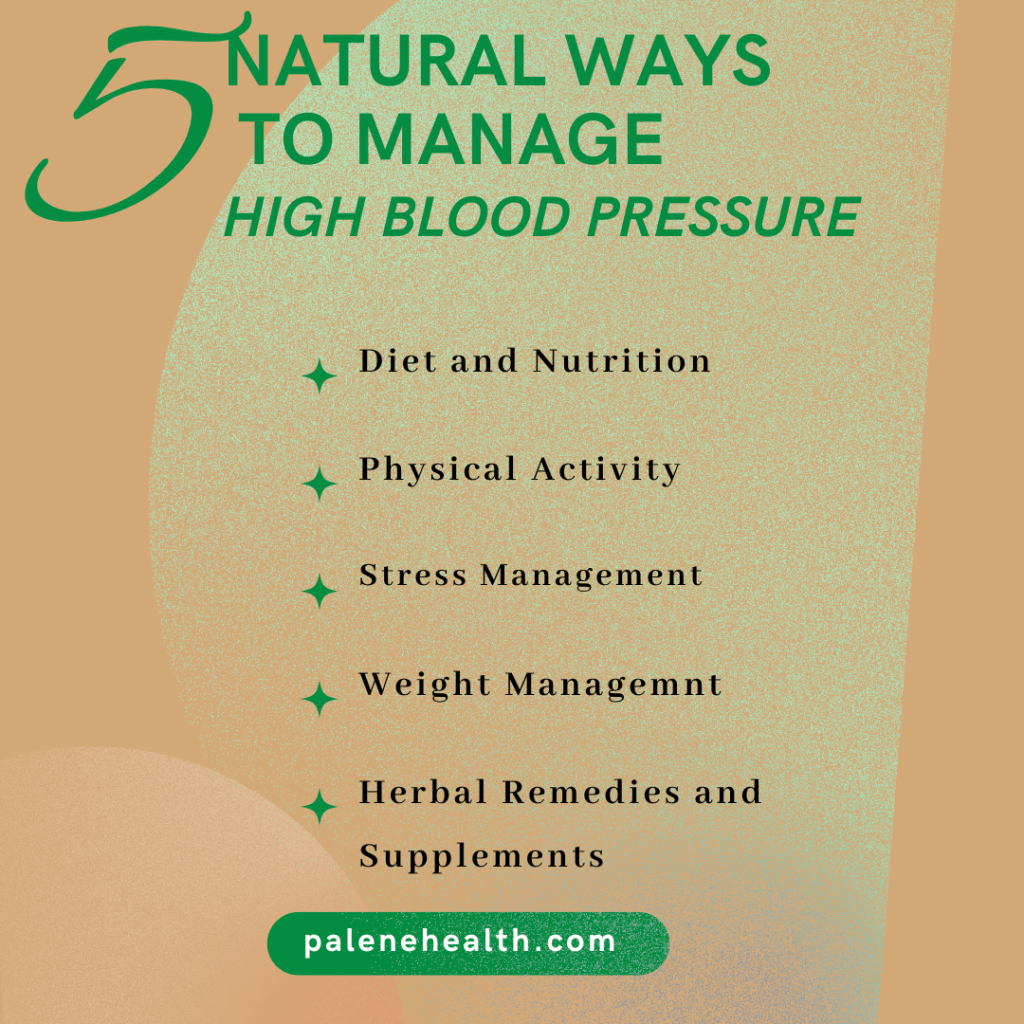
- Diet and Nutrition
What we eat forms a foundation for so many things in our bodies. Diet is one of the most powerful tools you have for managing blood pressure naturally. The food you eat can either contribute to high blood pressure or help keep it in check.
When it comes to diet, it’s important to understand the specific nutrients you are looking for in these foods. Many foods contain different nutrients so managing hypertension requires specific types of nutrients.
What Are the Key Nutrients for Managing High Blood Pressure Naturally?
- Potassium. This is a key essential mineral. Potassium helps in balancing the amount of sodium in your cells. Having too much sodium in the body makes the body retain so much water. As this water increases, it raises the blood volume and this causes elevated blood pressure.
Therefore, consuming potassium-rich foods is important as potassium helps in eliminating excess sodium. Foods rich in potassium include bananas, sweet potatoes, spinach, and avocados.
- Magnesium. In a world where people are heavily investing in health and wellness, magnesium is a key nutrient. Magnesium helps relax blood vessels, which can lower blood pressure. How does this happen?
When blood vessels constrict (contract), they increase blood pressure in the body. When relaxed, the blood pressure lowers and goes to a normal range. You can find magnesium in leafy greens, vegetables, nuts, seeds, and whole grains.
- Calcium. This mineral is often associated with bone health. However, calcium also plays a role in blood pressure regulation. You can find calcium in consuming dairy products, leafy greens, and fortified plant-based milk.
Foods to Include in Your Diet to Manage High Blood Pressure Naturally
- Fruits and Vegetables. Aim at eating a variety of fruits and vegetables in various colours and types to get a wide range of nutrients. Examples of these types may include berries, citrus fruits, leafy greens, and cruciferous vegetables.
- Whole Grains. These types of foods contain high fibre content and minerals that are key in managing hypertension naturally. Examples are Oats, quinoa, brown rice, and whole wheat.
- Lean Proteins. These contain healthier proteins that do not contribute to high cholesterol or high blood pressure. Key lean proteins you should consider are fish, poultry, beans, and legumes.
- Healthy Fats. Contrary to what most people think, there are healthy fats. Yes, fats are crucial in supporting your heart health which is important in maintaining normal blood pressure. Olive oil, avocados, and nuts contain these fats.
Foods to Avoid When Managing High Blood Pressure Naturally
- High-Sodium Foods. Consuming diets high in sodium content may make your blood pressure worse. To be safe, always check the labels of sodium content in processed foods, canned soups, and salty snacks.
- Sugary Foods and Drinks. Consuming excessive sugar is another key enemy of our health. It leads to weight gain and other issues that all increase the blood pressure.
- Trans Fats and Saturated Fats. These are the worst types of fats to consume. They clog arteries, reducing their volume and increasing blood pressure. Avoid fried foods, fast food, and packaged snacks.
The DASH Diet in Managing High Blood Pressure Naturally
The DASH Diet stands for ‘The Dietary Approaches to Stop Hypertension (DASH).’ It is a diet based on a well-researched eating plan specifically designed to help manage blood pressure. The Dash Diet encourages individuals to eat whole foods, fruits, vegetables, lean proteins, and low-fat dairy.
Again, it emphasizes reducing sodium, sugar, and red meat. If you can follow this diet correctly, you can help lower blood pressure within just a few weeks.
2. Regular Exercise and Physical Activity in Managing High Blood Pressure Naturally
Exercise isn’t just about losing weight or building muscle. Exercise is a vital component of blood pressure management. Engaging in physical activity helps strengthen your heart, allowing it to pump blood more efficiently. In return, this reduces the pressure on your arteries.
How Does Exercise Help Lower Blood Pressure Naturally?
- Improves Heart Health. Doing regular exercise strengthens the heart, enabling it to pump more blood with less effort. This ensures that the heart is functioning normally, hence lowering the blood pressure in the arteries.
- Reduces Stress Hormones. Exercising regularly offers many benefits to the body, including reducing the stress hormones. This keeps the body functions within the optimum range, contributing to lower blood pressure.
- Weight Management. Exercise helps with weight control. The benefit of losing excess weight (even a small amount of weight) is that it can significantly reduce blood pressure.
What Are the Recommended Types of Exercise for Managing High Blood Pressure Naturally?
- Aerobic Exercise. Activities like walking, jogging, cycling, and swimming are excellent ways to improve heart health. To achieve this goal, aim for at least 30 minutes of moderate-intensity aerobic exercise most days of the week.
- Strength Training. Resistance exercises can help your body maintain muscle. They also help in boosting metabolism, which then keeps your blood pressure in check.
- Yoga and Stretching. Yoga combines physical activity with breathing exercises and mindfulness. Performing Yoga keeps you relaxed and reduces stress, a key contributor to elevated blood pressure.
Tips for Incorporating Exercise in Managing High Blood Pressure Naturally
- Start slowly and gradually increase intensity and duration as you get used to the exercise.
- Find activities you enjoy to stay motivated. Do exercises that you enjoy so that you can always look forward to performing them again.
- Combine different types of exercise to break the monotony that can discourage you.
- Include physical activity in daily routines, like walking or cycling to work. You can as well take the stairs instead of a lift or try gardening.
3. Stress Management Techniques
Stress is a significant contributor to high blood pressure. This means that managing it is crucial in maintaining your overall well-being. Chronic stress leads to behaviours such as poor eating habits, lack of exercise or even alcohol consumption. All these behaviours are linked to high blood pressure and poor health outcomes.
What Are the Effective Stress-Reduction Strategies for Managing High Blood Pressure?
- Mindfulness Meditation. This is one of the best practices in managing high blood pressure naturally. This practice involves focusing on the present moment, which can reduce stress and anxiety. Even just a few minutes a day, where you don’t have to worry can make a difference.
- Deep Breathing Exercises. Breathing in and out gives life to our body cells, tissues and organs. Therefore, whenever you can, Take slow, deep breaths often. This activates the body’s relaxation response, helping to lower blood pressure.
- Progressive Muscle Relaxation. This technique involves tensing and then relaxing different muscle groups in the body to release tension. Once the tension is absent, the blood vessels relax, reducing the blood pressure.
- Hobbies and Activities. Teach yourself how to engage in activities you love. Try things like reading, painting, or spending time in nature. Doing this can provide a much-needed mental break and reduce stress.
4. Weight Management in High Blood Pressure
Based on scientific findings, there is a strong link between excess weight and high blood pressure. Why? Because carrying extra weight puts additional strain on your heart, making it harder to work extra harder. With time, this triggers the development of high blood pressure, a silent killer condition.
What Are the Tips for Achieving and Maintaining a Healthy Weight in Managing High Blood Pressure?
- Set Realistic Goals. Instead of wanting to lose many kilos instantly, go slowly. Aim for gradual weight loss, such as 1-2 pounds per week, which is more sustainable and healthier.
- Eat Mindfully. Pay attention to what you eat, when you eat, and why. Be in the present moment so that you enjoy the food and also notice when you are full. Avoid mindless snacking and emotional eating as they may lead to weight gain, a key factor in high blood pressure.
- Stay Active. Incorporate physical activity into your daily routine, even if it’s just walking or taking the stairs.
- Monitor Progress. Keep track of your weight and measurements no matter how small. This is important as it helps you to remain motivated and stuck to the plan.
5. Reducing Sodium and Alcohol Intake
Excessive sodium and alcohol intake are well-known contributors to high blood pressure. Reducing them gradually can contribute to your overall well-being.
How Does Sodium Affect Blood Pressure?
Sodium is a mineral that causes the body to retain water. Excess water increases the volume of blood in the bloodstream and, in turn, raises blood pressure.
Practical Tips for Reducing Sodium Intake
- Cook at Home. Preparing meals from home allows you to be keen on the amount of sodium that you are consuming.
- Use Herbs and Spices. Adding flavours to your food is one way of reducing the content of sodium you consume. Flavour the food with herbs, spices, garlic, and lemon juice instead of salt.
- Read Labels. When buying packaged food, always read the packaging. This is because packaged foods carry so much sodium content that is hidden. Choose low-sodium or sodium-free options.
What is the Impact of Alcohol on Blood Pressure?
Excessive alcohol consumption and high blood pressure go together. While moderate alcohol consumption might have some health benefits, excessive drinking impacts your blood pressure negatively. Therefore, limit the alcohol intake to moderate levels. It is recommended to drink up to one drink per day for women and two drinks per day for men.
6. Herbal Remedies and Supplements
One of the best ways of managing high blood pressure naturally is through herbs. The herbal remedies and dietary supplements can offer additional support for managing blood pressure without many side effects. However, it’s important to use them with caution and consult with a healthcare provider. Some supplements or herbs can interact with medications, causing severe health consequences.
What Are the Popular Herbal Remedies for Managing High Blood Pressure?
- Garlic. It is known for its heart health benefits. Garlic can help lower blood pressure by relaxing blood vessels.
- Hibiscus. Hibiscus tea has a diuretic and anti-inflammatory effect. This makes it the perfect herbal remedy for managing blood pressure.
- Omega-3 Fatty Acids. These are found in fish oil. Omega-3s can help reduce blood pressure by decreasing inflammation and improving blood vessel function.
Regular Monitoring and Consistency
Managing your blood pressure effectively requires regular and consistent monitoring. Adopting positive lifestyle changes is crucial in improving your overall well-being. Therefore, check your blood pressure regularly to help identify the impact of the natural methods you’re using and make adjustments as needed.
Tips for Regular Monitoring of High Blood Pressure
- Invest in a Home Blood Pressure Monitor. Instead of going to the hospital all the time, get blood pressure equipment. This allows you to keep track of your blood pressure at home and share results with your healthcare provider. It also saves you time and energy.
- Keep a Journal. Any moment you check your blood pressure, keep a record of these readings. diet, exercise, and stress levels to identify patterns and triggers.
- Stay Consistent. Unlike medications, natural methods may take time to show results. So, be patient and stay committed to the changes to experience all benefits.
When to Consult a Healthcare Professional
If your blood pressure remains high despite these efforts, please consult a medical professional. Also, if you experience symptoms like severe headaches, vision problems, or chest pain, seek medical advice immediately.
Conclusion
Managing high blood pressure naturally is a holistic approach that combines lifestyle changes, dietary adjustments, and stress reduction techniques. You can achieve this by focusing on a balanced diet rich in potassium, magnesium, and calcium.
Also, engaging in regular physical activity, managing stress, and avoiding excessive sodium and alcohol can effectively support your heart health and potentially lower your blood pressure. If medications are giving severe side effects, incorporating herbal remedies and supplements may also provide additional benefits.
However, use herbal remedies cautiously and under professional guidance. Consistency in monitoring and lifestyle changes is key to achieving and maintaining healthy blood pressure levels. Remember, while these methods can be highly effective, they do not replace professional medical advice and treatment. They complement these options.
Frequently Asked Questions (FAQs)
- How soon will I see results from natural methods?
Many people see improvements in a few weeks to months with consistent diet, exercise, and stress management. Regular monitoring and professional guidance are essential.
- What foods should I avoid to manage high blood pressure?
Avoid high-sodium foods, sugary items, and trans fats. Focus on whole foods like fruits, vegetables, and lean proteins instead.
- Are herbal supplements effective and safe for blood pressure?
Herbal supplements like garlic and hibiscus may help, but consult with a healthcare provider first to avoid interactions with medications and ensure safety.
 Palene Health