
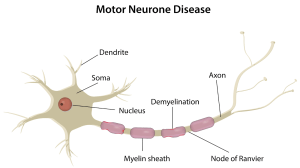
What is Motor Neurone Disease (MND)?
Motor neuron disease is a rare condition that affects the motor neurons. It is a devastating disease that attacks the nerves responsible for controlling muscles in the body (motor neurones). This disease belongs to a group of neurological disorders that progressively damage motor neurons. These neurons are crucial for sending signals from the brain to the muscles, enabling movement.
As the disease progresses, it causes neurons to degenerate and die gradually. When these neurons deteriorate, the muscles they control become weaker and eventually stop functioning. In return, this causes individuals with motor neuron disease to have paralysis.
MND is not a single disease but an umbrella term for several related conditions, including:
1. Amyotrophic Lateral Sclerosis (ALS)
This is also known as Lou Gehrig’s disease. It is the most common form of MND, characterized by the degeneration of motor neurons in the brain and spinal cord.
2. Progressive Muscular Atrophy (PMA)
In this condition, the lower motor neurons in the spinal cord deteriorate, leading to muscle wasting.
3. Progressive Bulbar Palsy (PBP)
This type of MND affects the motor neurons responsible for speech and swallowing. It also affects other bulbar functions such as breathing, chewing and facial movements
4. Primary Lateral Sclerosis (PLS)
This condition causes the degeneration of upper motor neurons, leading to stiffness and weakness in the muscles.
5. Spinal and Bulbar Muscular Atrophy (SBMA)
It is also known as Kennedy’s disease, this genetic disorder primarily affects men and leads to the degeneration of motor neurons in the spinal cord and brainstem. Kennedy’s Disease is named after Dr. William R. Kennedy, the neurologist who first described the condition in 1968. Dr.
Symptoms of Motor Neurone Disease (MND)
MND is a progressive disease, meaning that its symptoms worsen over time. The onset of symptoms is usually gradual, starting on one side of the body before spreading. The initial symptoms may be subtle and can include:
Weakness in the Hands and Grip. This makes it difficult to do tasks requiring fine motor skills, such as buttoning a shirt or writing.
Slurred Speech. As the disease worsens, a patient may experience slow speech which then becomes slurred, and difficult to understand.
Weakness in the Legs. This makes an individual trip or stumble while walking. It is caused by muscle weakness in the legs.
Shoulder Weakness. This makes it difficult to lift objects or raise the arms above the head.
Muscle Cramps and Twitching. These twitchings are involuntary muscle contractions. They are known as fasciculations.
As the disease progresses, the symptoms become more severe:
Loss of Movement. Over time, individuals with MND become very weak and may lose the ability to move completely.
Difficulty Talking, Breathing, and Swallowing. As the disease progresses, the muscles responsible for these vital functions weaken, leading to significant challenges.
Cognitive Changes. A small percentage of people with MND may develop a form of dementia. This is a condition characterized by memory loss, changes in behaviour, and difficulty with problem-solving.
Despite these challenges, MND does not typically affect the senses. People with MND retain their ability to see, hear, smell, taste, and touch.
What Causes Motor Neurone Disease (MND)?
This disease does not have one single causative agent. In fact, the exact cause of MND remains unknown, making it a mysterious and challenging condition to study. However, researchers believe that MND is caused by a combination of genetic, environmental, and lifestyle factors as explained below;
Genetic Factors
According to scientific findings on this condition, approximately 10% of MND cases are inherited. This condition results from specific genetic mutations that are then passed down throughout generations. For example, if a person has a family history of MND, they may be at a higher risk of developing the disease. Knowing that is key as it can help you to consider genetic testing. This test is key in helping identify these mutations and provide insight into the likelihood of developing MND. Read here on how genetics links you to developing MND: https://www.medicalnewstoday.com/articles/281472
Environmental and Lifestyle Factors
For most people with MND, there is no clear cause. Researchers are investigating various environmental and lifestyle factors that may contribute to the development of the disease. These factors could include exposure to toxins, heavy metals, and other environmental agents. It is important to note that MND is not contagious, and you cannot catch it from someone else.
Diagnosing Motor Neurone Disease (MND)
Diagnosing MND can be a challenging task, especially in the early stages when symptoms are mild and non-specific. Since there is no single test for MND, a thorough evaluation by a healthcare professional is essential. Since MND shares symptoms with other neurological conditions, these tests are essential for an accurate diagnosis.
This may include:
Initial Assessment. This requires a deliberate effort. Here, an individual notices any symptom associated with MND, such as muscle weakness or slurred speech, and sees the doctor immediately. Doing this may help in early diagnosis which is essential for managing the disease and improving the quality of life.
Neurological Examination. This is a medical examination done by a neurologist, a specialist in brain and nerve disorders. The doctor performs a detailed examination to assess muscle strength, reflexes, and coordination.
Electromyography (EMG). This test measures the electrical activity of muscles and can detect abnormalities in motor neuron function.
Nerve Conduction Studies. These tests evaluate how well the nerves transmit signals to the muscles. Any abnormal findings in the results may indicate motor neuron damage.
Blood Tests. Blood tests are basic tests used to help rule out other conditions that may cause similar symptoms to MND.
Muscle Biopsy. In some cases, a small sample of muscle tissue may be taken for examination under a microscope to look for signs of muscle degeneration.
Treatment and Management of Motor Neurone Disease (MND)
Currently, there is no cure for MND. Therefore, the treatment focuses on managing symptoms, improving quality of life, and maintaining mobility for as long as possible. The management of MND requires a multidisciplinary approach involving various healthcare professionals to achieve comprehensive care. They include:
Medication
There are medications that can help in managing the symptoms of Motor Neurone Disease. These medications work by slowing the progression of the disease. One example of such medication is Riluzole. It is a drug that has been shown to prolong survival in people with ALS, the most common form of MND. Here are more treatment options: https://shorturl.at/mtOlm
Physical Therapy
Using physical therapy is crucial as it helps in maintaining muscle strength and flexibility. For better results, it is ideal to get exercises tailored to your needs by a professional. This can reduce muscle stiffness and improve mobility.
Occupational Therapy
Occupational therapists can assist in teaching you how to adapt your daily activities to accommodate muscle weakness. Sometimes, therapists may recommend assistive devices or modify the home environment to suit your needs.
Speech Therapy
Motor Neurone Disease impairs the ability to speak properly. Swallowing difficulties also arise, creating a need for speech therapists. These experts provide strategies and tools to help with communication and safe eating.
Nutritional Support
MND may make it difficult for patients to eat properly, especially when swallowing is limited. As a result, such individuals are more likely to suffer from malnutrition or lack essential nutrients. Therefore, maintaining adequate nutrition is vital. Dietitians can recommend dietary modifications and, in some cases, tube feeding may be necessary if swallowing becomes too difficult.
Respiratory Support
Breathing difficulties are common in the advanced stages of MND. In such instances, doctors may recommend Non-invasive ventilation, such as a BiPAP machine, which can help support breathing during sleep. In some cases, more advanced respiratory support may be required.
Psychological Support
Coping with MND can be emotionally challenging for both the person with the disease and their family. Psychological support, counselling, and support groups can provide essential emotional and mental health assistance.
End-of-Life Care
Given the progressive nature of MND, planning for end-of-life care is crucial. This may involve discussions about advanced care directives, and palliative care options. This is usually a collaborative approach and ensures that the individual’s wishes are respected.
Complications and Prognosis of Motor Neurone Disease (MND)
The complications of MND are primarily related to the advanced stages of the disease. This is when respiratory failure and paralysis become significant concerns. As muscles responsible for breathing weaken, individuals with MND may require respiratory support. Paralysis can lead to a loss of independence, making it difficult for individuals to perform daily activities without assistance.
The prognosis for MND varies from person to person. On average, most people with MND live for 2 to 3 years after the onset of symptoms. However, some individuals live much longer, while others may experience a more rapid progression of the disease. The variability in disease progression makes it difficult to predict the exact course of MND for each individual.
How to Prevent Motor Neurone Disease (MND)
Since the exact cause of MND is not fully understood, there are no known methods to prevent the disease. However, ongoing research is focused on identifying potential risk factors and developing strategies to reduce the risk of developing MND.
For individuals with a family history of MND, genetic counselling and testing can provide valuable information about their risk of developing the disease. While not all people with a genetic mutation will develop MND, knowing one’s genetic status can help with planning and decision-making.
Continued research into the underlying causes and potential treatments for MND offers hope for the future. By increasing awareness and supporting those affected by MND, we can work towards better care and, ultimately, a cure for this debilitating disease. Access more information on Motor Neurone Disease here: https://shorturl.at/QFOJy
Frequently Asked Questions (FAQs) About MND
1. What is MND?
MND (Motor Neurone Disease) is a progressive condition that affects the nerves in the brain and spinal cord, leading to muscle weakness, paralysis, and eventually, loss of essential functions like speaking, swallowing, and breathing.
2. What are the first signs of MND?
The first signs of MND often include muscle weakness, cramps, slurred speech, and difficulty with fine motor tasks like buttoning a shirt or holding objects.
3. How long can you live with MND?
Most people with MND live for 2 to 5 years after diagnosis, but some can live longer with the disease, depending on the type and how it progresses.
4. What causes MND?
The exact cause of MND is unknown. It’s believed to result from a combination of genetic, environmental, and lifestyle factors. Around 10% of cases are inherited.
5. Is there a cure for MND?
There is no cure for MND. Treatment focuses on managing symptoms, slowing disease progression, and improving quality of life.
 Palene Health