
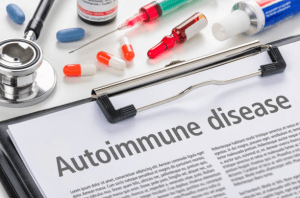
Are you aware that there are over 80 autoimmune diseases that affect people worldwide? Again, among the 80 conditions, only 14 are common. An autoimmune disease can be defined as a condition in which your immune system attacks your body cells by mistake.
We can also say that this condition happens when your body’s natural defense system cannot tell the difference between your cells and foreign cells, making it attack your normal healthy cells. The immune system protects the body against invasion by bacteria, viruses, parasites, etc.
How does it do this? It carries out this function by sensing the presence of microbes and then immediately sends the antibodies (fighter cells) to attack and kill the microbes. Ideally, your immune system can tell whether the cells are yours or they are foreign.
When it comes to autoimmune disease, the body loses this ability to distinguish cells and therefore it attacks your joints or skin because it sees these parts as foreign. It does this by sending proteins called antibodies which attack your body parts.
Autoimmune diseases affect both genders regardless of their age, ethnicity, and social classes. One unique feature of this disease is that it affects more women than men because estrogen tends to enhance immunity. Androgens (found in males) on the other hand are immunosuppressive.
What does this mean? The higher the immunity you have in your body, the higher the risk of you getting an autoimmune disease, explaining why women are so prone. Autoimmune conditions are the leading cause of death among women of reproductive age.
What Are the Types of Autoimmune Diseases?
Autoimmune disorders are broadly categorized into two major categories depending on how specific the condition is. These categories are:
Organ-specific-this means that the disease only attacks one organ, i.e., lungs, skin, joints, etc.
Non-organ specific– these attacks multiple organs or body systems, i.e., respiratory, and digestive systems together.
1. Autoimmune Diseases of the Joints and Muscles.
a) Rheumatoid Arthritis-this condition happens when your immune system attacks your joints. Then, soreness, stiffness, redness, and warmth around the joints follow. The disease can target other parts as well like the eyes, lungs, and heart.
b) Systemic Lupus Erythematosus (SLE)-this one affects connective tissues found in many body organs. It can attack any system or organ within the body, i.e., heart, kidneys, brain, joints, etc. It is characterized by joint pain, general body malaise, rashes, etc.
c)Sjogren’s Syndrome-Your eyes and mouth have glands that secrete fluids to lubricate them. When these glands are damaged, they lead to dry eyes and mouth, a condition called Sjogren’s Syndrome. It affects joints and skin as well.
2. Autoimmune Diseases of the Digestive Tract.
a) Crohn’s Disease-this is a gastrointestinal condition, and it can attack any part of it, i.e., from the mouth to the anus. It causes life-threatening complications. It progresses fast and therefore immunosuppressants and steroids can be used to counteract this. It causes abdominal pain, weight loss, fatigue, and many more.
b) Celiac Disease-People suffering from this condition cannot consume anything containing gluten, a protein usually found in wheat, rye, and other grain products. When someone allergic to gluten eats it, the body attacks the small intestines and therefore causes inflammation.
c) Ulcerative Colitis-This condition primarily affects the lining of the large intestines (colon) and rectum. It is characterized by rectal bleeding, diarrhea, abdominal pain, etc. It also exposes people who suffer from it to colorectal cancer. When the disease is severe, surgery may be needed where some parts of the colon or rectum are removed. Removal of these parts can make patients enjoy normal life, but it reduces their quality of life.
3. Autoimmune Diseases of the Endocrine System.
a) Graves’ Disease-when one suffers from this disease, which means that the thyroid gland is attacked, making it produce too much of its hormones. Its hormones are known to control metabolism rates in the body, so having these hormones in excess can cause nervousness, rapid heartbeats, heat intolerance, and weight loss. There is one main symptom of this disease and that is bulging of the eyes, also called exophthalmos.
b) Hashimoto’s Thyroiditis-In this disease, the thyroid gland is affected, reducing the production of thyroid hormones. In return, this causes weight gain, hair loss, cold sensitivity, hair loss, fatigue, and swelling of the thyroid (goiter).
c) Addison’s Disease-This disease specifically affects the adrenal glands of the kidneys. These glands produce cortisol, aldosterone, and androgens. Cortisol is an important hormone involved in the regulation of carbohydrates in the body. When this gland is damaged, it means that cortisol levels will go low therefore, the body will not be able to use and store carbohydrates properly.
When aldosterone levels are reduced, it causes sodium loss and excess potassium, two essential elements from the bloodstream. Its symptoms are weakness, weight loss, fatigue, and low blood sugar.
4. Autoimmune Diseases of the Skin.

a) Psoriasis-it is also called Psoriatic Arthritis. Ideally, your skin cells can grow and shed when no longer needed. In Psoriasis, the skin cells multiply too quickly. This usually is very disadvantageous because the extra skin cells build up causing red patches. Also, you can find silver-white scales/plaque on the skin surface.
b) Dermatomyositis is a long-term inflammatory disorder that affects the skin and the muscles. It can affect people of all ages but is most common in people between the ages of 40-60 years, particularly women. It leads to a dusky red rash on the face and eyelids, nails, and knuckles. It can also manifest on the elbows, chest, and back, causing muscle weakness.
5. Autoimmune Diseases of the Nervous System.
a) Guillain-Barre Syndrome-this is a rare condition, in which your body attacks the nerves lining the peripheral nervous system. It mostly affects feet, hands, and limbs, causing pain, paralysis, and numbness. When discovered on time, patients can heal but it can be life-threatening at times. It affects adult males mostly.
b) Multiple Sclerosis-The nerve cells of your brain are surrounded by a coat called myelin sheath which enables it to transmit impulses. Multiple Sclerosis damages this sheath, slowing down the speed at which the impulses are sent to the brain. If an impulse is delayed reaching the brain, it means that it will also be delayed when coming back to the rest of the body and the spinal cord.
This then leads to numbness, weakness, balance problems, and difficulty in walking. After this disease attacks someone, such people after 15 years cannot walk independently and will need support, i.e., a wheelchair.
c) Chronic Inflammatory Demyelinating Polyneuropathy (CIDP)-s caused by damage to the myelin sheath (the fatty covering that wraps around and protects nerve fibers) of the peripheral nerves. It is highly linked to GBS where it is said to be a complication of an acute form of GBS.
It has symptoms like tingling or numbness (beginning in the toes and fingers), weakness of the arms and legs, loss of deep tendon reflexes (areflexia), fatigue, and abnormal sensations. It is common in men and its cause is unknown and it is nowhere linked to genetics or inheritance.
Other Autoimmune Diseases.
a) Diabetes Type 1-The immune system in Diabetes Type 1 attacks and destroys insulin-producing cells found in the pancreas. Since these cells are involved in the regulation of blood glucose levels, it means that when damaged, the body loses its ability to control the amount of glucose in the blood.
This results in high glucose levels which can damage the blood vessels, heart, kidneys, eyes, and even nerves. This condition is characterized by increased thirst (polydipsia), frequent urination(polyuria), increased hunger (polyphagia), and increased susceptibility to acquiring infections.
b) Pernicious Anemia-your stomach produces a certain protein called intrinsic factor, which is produced by the stomach lining. This protein is important because it is needed by the small intestines to absorb Vitamin B12. Failure to absorb enough Vitamin B12, someone develops anemia.
How does this happen? Vitamin B12 and Folate are needed during the synthesis of iron in the body. When it is lacking, this process is impaired causing pernicious anemia.
c) Autoimmune Vasculitis-this happens when your immune system attacks the blood vessels in the body. This causes inflammation, which then makes the arteries and veins too narrow. What happens when they become like this?
Blood flow is impaired and cannot reach the intended organs. In the end, patients experience fatigue, weakness, breathlessness, and sometimes the organs can die(necrosis).
d) Myasthenia Gravis-This disease affects the nerve impulses which enable the brain to control body muscles. This means that when the communication from nerves to muscles is impaired, signals cannot direct the muscles to contract, therefore causing issues with muscle weakness.
This weakness gets worse with any activity but when at rest, the condition improves. It mostly impairs muscles that control the movement of the eyes, eyelid opening, swallowing, and facial movements.
Who Is at Risk of Getting Autoimmune Disease?
These diseases just do not happen. Various things expose one to have them, which include:
Genetic autoimmune diseases seem to run in families and anyone who carries these genes is usually at risk. Diseases such as Diabetes are a perfect example of how these diseases are passed from one generation to another. They mostly affect first-line relatives like the mother-daughter-grandson.
Gender-Some diseases prefer one gender over the other for distinct reasons. In the world currently, 75% of people with these conditions are women.
Sex hormones-According to research by scientists, it has been found that most autoimmune diseases attack people, especially women during childbearing age. Pregnancy, childbirth, and menopause are all stages involving major sex hormones and this is when autoimmunity strikes the most.
Weight-when someone becomes overweight, he/she is usually exposed to some conditions like rheumatoid arthritis. Why this? It is because more weight puts stress on the joints causing them to swell. Also, fat tissues in the body can produce chemicals that trigger inflammation.
NOTE: Autoimmune disorders do not have a cure. But there are treatment options that can be used to control over-active responses to reduce inflammation and pain, just to make life bearable. Examples of such drugs are:
- Immunosuppressive drugs.
- NSAIDs i.e., Ibuprofen
Finally,
Autoimmune diseases are quite common and there is no known cure for them. People living with these conditions can live a normal life with proper treatment, especially when the disease is discovered early. Emotional, physical, and psychological support is very key to people undergoing treatment, as this can make them feel safer and hopeful.
No matter how stressful these conditions are, you can just take one day at a time by eating healthy, exercising, being positive, and doing regular hospital checkups.
 Palene Health